.comment-link {margin-left:.6em;}

Economy

Economic Data (USA)

Wednesday, December 23, 2020

PCE Price Index + Personal Income + Consumer Spending Report for November 2020

The Commerce Department's Bureau of Economic Analysis (BEA) released its report on The PCE Price Index, Consumer Spending and Personal Income for November 2020:

=============

Consumer Spending (Personal Consumption Expenditures)

Predicted: -0.5%

  • Actual: -0.4%
  • Actual (2012 Chained* Dollars): -0.4%
=============

Personal Income

Predicted: -1.0%
  • Actual: -1.1%
=============

  • Disposable Personal Income, Current Dollars: -1.2%
  • Disposable Personal Income (2012 Chained* Dollars): -1.3%

=============

The above highlighted percentages represent the month-to-month change in Consumer Spending (aka Personal Consumption Expenditures), Personal Income and Disposable Personal Income for the entire United States.

=============

===================== 
 
 
CHART: Change in Personal Income - November 2020 Update
CHART: Change in Personal Income
November 2020 Update
 
=====================

=====================

Personal Consumption Expenditures (PCE) Price Index
Predicted: Unchanged
Actual: Unchanged 

  • Change from 12 months previous: +1.1%
=====================

Core PCE Price Index
( = PCE Price Index minus food and energy)
Predicted: Unchanged
Actual: Unchanged

  • Change from 12 months previous: +1.4%
=====================

The yellow-highlighted percentages represent the month-to-month change in the prices associated with domestic personal consumption.  The PCE Price Index is different from the Consumer Price Index (CPI) in that it is a very broad measure of the prices associated with domestic products and services, while the CPI measures a more limited fixed basket of goods and services.

The broad nature of the PCE Price Index is key to why it is the Federal Reserve's preferred measure of inflation.  The Federal Open Market Committee (FOMC) pays very close attention to it.

=====================

The "predicted" figures are what economists were expecting, while the "actual" figures are the true or real figure.


=====================

 =====================

*Chained dollars is a method of adjusting real dollar amounts for inflation over time, so as to allow comparison of figures from different years. The Commerce Department introduced the chained-dollar measure in 1996. Chained dollars generally reflect dollar figures computed with 2012 as the base year.

Labels: , , , , , , , , , , , , ,


--> www.FedPrimeRate.com Privacy Policy <--

CLICK HERE to JUMP to the TOP of THIS PAGE

>  SITEMAP  <

Wednesday, November 25, 2020

PCE Price Index + Personal Income + Consumer Spending Report for October 2020

The Commerce Department's Bureau of Economic Analysis (BEA) released its report on The PCE Price Index, Consumer Spending and Personal Income for October 2020:

=============

Consumer Spending (Personal Consumption Expenditures)

Predicted: +0.5%

  • Actual: +0.5%
  • Actual (2012 Chained* Dollars): +0.5%
=============

Personal Income

Predicted: +1.0%
  • Actual: -0.7%
=============

  • Disposable Personal Income, Current Dollars: -0.8%
  • Disposable Personal Income (2012 Chained* Dollars): -0.8%

=============

The above highlighted percentages represent the month-to-month change in Consumer Spending (aka Personal Consumption Expenditures), Personal Income and Disposable Personal Income for the entire United States.

=============

=====================
=====================

=====================

Personal Consumption Expenditures (PCE) Price Index
Predicted: Unchanged
Actual: Unchanged 

  • Change from 12 months previous: +1.2%
=====================

Core PCE Price Index
( = PCE Price Index minus food and energy)
Predicted: Unchanged
Actual: Unchanged

  • Change from 12 months previous: +1.4%
=====================

The yellow-highlighted percentages represent the month-to-month change in the prices associated with domestic personal consumption.  The PCE Price Index is different from the Consumer Price Index (CPI) in that it is a very broad measure of the prices associated with domestic products and services, while the CPI measures a more limited fixed basket of goods and services.

The broad nature of the PCE Price Index is key to why it is the Federal Reserve's preferred measure of inflation.  The Federal Open Market Committee (FOMC) pays very close attention to it.

=====================

The "predicted" figures are what economists were expecting, while the "actual" figures are the true or real figure.


=====================

 =====================

*Chained dollars is a method of adjusting real dollar amounts for inflation over time, so as to allow comparison of figures from different years. The Commerce Department introduced the chained-dollar measure in 1996. Chained dollars generally reflect dollar figures computed with 2012 as the base year.

Labels: , , , , , , , , , , , , ,


--> www.FedPrimeRate.com Privacy Policy <--

CLICK HERE to JUMP to the TOP of THIS PAGE

>  SITEMAP  <

Friday, August 28, 2020

PCE Price Index + Personal Income + Consumer Spending Report for July 2020

The Commerce Department's Bureau of Economic Analysis (BEA) released its report on The PCE Price Index, Consumer Spending and Personal Income for July 2020:

=============

Consumer Spending (Personal Consumption Expenditures)

Predicted: +2.0%

  • Actual: +1.9%
  • Actual (2012 Chained* Dollars): +1.6%
=============

Personal Income

Predicted: +0.5%
  • Actual: +0.4%
=============

  • Disposable Personal Income, Current Dollars: +0.2%
  • Disposable Personal Income (2012 Chained* Dollars): -0.1%

=============

The above highlighted percentages represent the month-to-month change in Consumer Spending (aka Personal Consumption Expenditures), Personal Income and Disposable Personal Income for the entire United States.

=============

=====================
=====================

=====================

Personal Consumption Expenditures (PCE) Price Index
Predicted: +0.5%
Actual: +0.3%

  • Change from 12 months previous: +1.0%
=====================

Core PCE Price Index
( = PCE Price Index minus food and energy)
Predicted: +0.5%
Actual: +0.3%

  • Change from 12 months previous: +1.3%
=====================

The yellow-highlighted percentages represent the month-to-month change in the prices associated with domestic personal consumption.  The PCE Price Index is different from the Consumer Price Index (CPI) in that it is a very broad measure of the prices associated with domestic products and services, while the CPI measures a more limited fixed basket of goods and services.

The broad nature of the PCE Price Index is key to why it is the Federal Reserve's preferred measure of inflation.  The Federal Open Market Committee (FOMC) pays very close attention to it.

=====================

The "predicted" figures are what economists were expecting, while the "actual" figures are the true or real figure.


=====================

From Today's Report:


"...Coronavirus (COVID-19) Impact on July 2020 Personal Income and Outlays


The July estimate for personal income and outlays was impacted by the response to the spread of COVID-19. Federal economic recovery payments continued but were at a lower level than in June, and government “stay-at-home” orders lifted in some areas of the country. The full economic effects of the COVID-19 pandemic cannot be quantified in the personal income and outlays estimate because the impacts are generally embedded in source data and cannot be separately identified..."

=====================
 
CHART: Month-to-Month Change In Personal Income - July 2020 Update
CHART: Month-to-Month Change In Personal Income
July 2020 Update

=====================

 =====================

*Chained dollars is a method of adjusting real dollar amounts for inflation over time, so as to allow comparison of figures from different years. The Commerce Department introduced the chained-dollar measure in 1996. Chained dollars generally reflect dollar figures computed with 2012 as the base year.

Labels: , , , , , , , , , , , , ,


--> www.FedPrimeRate.com Privacy Policy <--

CLICK HERE to JUMP to the TOP of THIS PAGE

>  SITEMAP  <

Friday, June 26, 2020

PCE Price Index + Personal Income + Consumer Spending Report for May 2020

The Commerce Department's Bureau of Economic Analysis (BEA) released its report on The PCE Price Index, Consumer Spending and Personal Income for May 2020:

=============

Consumer Spending (Personal Consumption Expenditures)

Predicted: +5.0%

  • Actual: +8.2%
  • Actual (2012 Chained* Dollars): +8.1%
=============

Personal Income

Predicted: -5.0%
  • Actual: -4.2%
=============

  • Disposable Personal Income, Current Dollars: -4.9%
  • Disposable Personal Income (2012 Chained* Dollars): -5.0%

=============

The above highlighted percentages represent the month-to-month change in Consumer Spending (aka Personal Consumption Expenditures), Personal Income and Disposable Personal Income for the entire United States.

=============

=====================
=====================

=====================

Personal Consumption Expenditures (PCE) Price Index
Predicted: Unchanged
Actual: +0.1%

  • Change from 12 months previous: +0.5%
=====================

Core PCE Price Index
( = PCE Price Index minus food and energy)
Predicted: Unchanged
Actual: +0.1%

  • Change from 12 months previous: +1.0%
=====================

The yellow-highlighted percentages represent the month-to-month change in the prices associated with domestic personal consumption.  The PCE Price Index is different from the Consumer Price Index (CPI) in that it is a very broad measure of the prices associated with domestic products and services, while the CPI measures a more limited fixed basket of goods and services.

The broad nature of the PCE Price Index is key to why it is the Federal Reserve's preferred measure of inflation.  The Federal Open Market Committee (FOMC) pays very close attention to it.

=====================

The "predicted" figures are what economists were expecting, while the "actual" figures are the true or real figure.


=====================

From Today's Report:


"...Coronavirus (COVID-19) Impact on May 2020 Personal Income and Outlays

The May estimate for personal income and outlays was impacted by the response to the spread of
COVID-19. Federal economic recovery payments continued but were at a lower level than in April, and government “stay-at-home” orders were partially lifted in May. The full economic effects of the COVID-19 pandemic cannot be quantified in the personal income and outlays estimate for May because the impacts are generally embedded in source data and cannot be separately identified. For more information, see the “highlights” file and the Effects of Selected Federal Pandemic Response Programs on Personal Income table..."

=====================


CHART: Month-to-Month Change In Personal Income - May 2020 Update
CHART: Month-to-Month Change In Personal Income
May 2020 Update

=====================

 =====================

*Chained dollars is a method of adjusting real dollar amounts for inflation over time, so as to allow comparison of figures from different years. The Commerce Department introduced the chained-dollar measure in 1996. Chained dollars generally reflect dollar figures computed with 2012 as the base year.

Labels: , , , , , , , , , , , ,


--> www.FedPrimeRate.com Privacy Policy <--

CLICK HERE to JUMP to the TOP of THIS PAGE

>  SITEMAP  <

Friday, May 29, 2020

PCE Price Index + Personal Income + Consumer Spending Report for April 2020

The Commerce Department's Bureau of Economic Analysis (BEA) released its report on The PCE Price Index, Consumer Spending and Personal Income for April 2020:

=============

Consumer Spending (Personal Consumption Expenditures)
Predicted: -10.0%
Actual: -13.6%

----------------------

Personal Income
Predicted: -5.0%
Actual: +10.5%

=============

  • Disposable Personal Income, Current Dollars: +12.9%
  • Disposable Personal Income, 2012 Chained* Dollars: +13.4%

=============

The above highlighted percentages represent the month-to-month change in Consumer Spending (aka Personal Consumption Expenditures), Personal Income and Disposable Personal Income for the entire United States.

=============

=====================
=====================

Personal Consumption Expenditures (PCE) Price Index
Predicted: -0.5%
Actual: -0.5%

  • Change from 12 months previous: +0.5%
=====================

Core PCE Price Index
( = PCE Price Index minus food and energy)
Predicted: -0.5%
Actual: -0.4%

  • Change from 12 months previous: +1.0%
=====================

The yellow-highlighted percentages represent the month-to-month change in the prices associated with domestic personal consumption.  The PCE Price Index is different from the Consumer Price Index (CPI) in that it is a very broad measure of the prices associated with domestic products and services, while the CPI measures a more limited fixed basket of goods and services.

The broad nature of the PCE Price Index is key to why it is the Federal Reserve's preferred measure of inflation.  The Federal Open Market Committee (FOMC) pays very close attention to it.

=====================

The "predicted" figures are what economists were expecting, while the "actual" figures are the true or real figure.


=====================

From Today's Report:


"...The April estimate for personal income and outlays was impacted by the response to the spread of COVID-19, as federal economic recovery payments were distributed, and governments continued with “stay-at-home” orders. The full economic effects of the COVID-19 pandemic cannot be quantified in the personal income and outlays estimate for April because the impacts are generally embedded in source data and cannot be separately identified. For more information, see the “highlights” file and the Effects of Selected Federal Pandemic Response Programs on Personal Income table..."


=====================

 =====================

*Chained dollars is a method of adjusting real dollar amounts for inflation over time, so as to allow comparison of figures from different years. The Commerce Department introduced the chained-dollar measure in 1996. Chained dollars generally reflect dollar figures computed with 2012 as the base year.

Labels: , , , , , , , , , , , ,


--> www.FedPrimeRate.com Privacy Policy <--

CLICK HERE to JUMP to the TOP of THIS PAGE

>  SITEMAP  <

Friday, March 27, 2020

PCE Price Index + Personal Income + Consumer Spending Report for February 2020

The Commerce Department's Bureau of Economic Analysis (BEA) released its report on The PCE Price Index, Consumer Spending and Personal Income for February 2020:

=============

Consumer Spending (Personal Consumption Expenditures)
Predicted: +0.2%
Actual: +0.2%

----------------------

Personal Income
Predicted: +0.4%
Actual: +0.6%

=============

  • Disposable Personal Income, Current Dollars: +0.5%
  • Disposable Personal Income, 2012 Chained* Dollars: +0.4%

=============

The above highlighted percentages represent the month-to-month change in Consumer Spending (aka Personal Consumption Expenditures), Personal Income and Disposable Personal Income for the entire United States.

=============

=====================
=====================

Personal Consumption Expenditures (PCE) Price Index
Predicted: +0.1%
Actual: +0.1%

  • Change from 12 months previous: +1.8%
=====================

Core PCE Price Index
( = PCE Price Index minus food and energy)
Predicted: +0.2%
Actual: +0.2%

  • Change from 12 months previous: +1.8%
=====================

The yellow-highlighted percentages represent the month-to-month change in the prices associated with domestic personal consumption.  The PCE Price Index is different from the Consumer Price Index (CPI) in that it is a very broad measure of the prices associated with domestic products and services, while the CPI measures a more limited fixed basket of goods and services.

The broad nature of the PCE Price Index is key to why it is the Federal Reserve's preferred measure of inflation.  The Federal Open Market Committee (FOMC) pays very close attention to it.

=====================

The "predicted" figures are what economists were expecting, while the "actual" figures are the true or real figure.


=====================

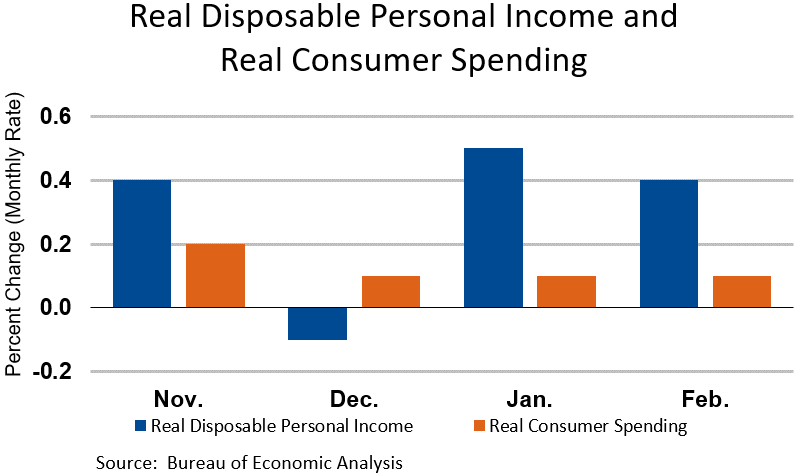
Chart: Disposable Personal Income and Real Consumer Spending - February 2020 Update
Chart: Disposable Personal Income and Real Consumer Spending
February 2020 Update

=====================

 =====================

*Chained dollars is a method of adjusting real dollar amounts for inflation over time, so as to allow comparison of figures from different years. The Commerce Department introduced the chained-dollar measure in 1996. Chained dollars generally reflect dollar figures computed with 2012 as the base year.

Labels: , , , , , , , , , , ,


--> www.FedPrimeRate.com Privacy Policy <--

CLICK HERE to JUMP to the TOP of THIS PAGE

>  SITEMAP  <

Friday, February 28, 2020

PCE Price Index + Personal Income + Consumer Spending Report for January 2020

The Commerce Department's Bureau of Economic Analysis (BEA) released its report on The PCE Price Index, Consumer Spending and Personal Income for January 2020:

=============

Consumer Spending (Personal Consumption Expenditures)
Predicted: +0.3%
Actual: +0.2%

----------------------

Personal Income
Predicted: +0.3%
Actual: +0.6%

=============

  • Disposable Personal Income, Current Dollars: +0.6%
  • Disposable Personal Income, 2012 Chained* Dollars: +0.5%

=============

The above highlighted percentages represent the month-to-month change in Consumer Spending (aka Personal Consumption Expenditures), Personal Income and Disposable Personal Income for the entire United States.

=============

=====================
=====================

Personal Consumption Expenditures (PCE) Price Index
Predicted: +0.1%
Actual: +0.1%

  • Change from 12 months previous: +1.7%
=====================

Core PCE Price Index
( = PCE Price Index minus food and energy)
Predicted: +0.2%
Actual: +0.1%

  • Change from 12 months previous: +1.6%
=====================

The yellow-highlighted percentages represent the month-to-month change in the prices associated with domestic personal consumption.  The PCE Price Index is different from the Consumer Price Index (CPI) in that it is a very broad measure of the prices associated with domestic products and services, while the CPI measures a more limited fixed basket of goods and services.

The broad nature of the PCE Price Index is key to why it is the Federal Reserve's preferred measure of inflation.  The Federal Open Market Committee (FOMC) pays very close attention to it.

=====================

The "predicted" figures are what economists were expecting, while the "actual" figures are the true or real figure.


=====================

Chart: Disposable Personal Income and Real Consumer Spending  January 2020 Update

Chart: Disposable Personal Income and Real Consumer Spending
January 2020 Update

=====================

 =====================

*Chained dollars is a method of adjusting real dollar amounts for inflation over time, so as to allow comparison of figures from different years. The Commerce Department introduced the chained-dollar measure in 1996. Chained dollars generally reflect dollar figures computed with 2012 as the base year.


Labels: , , , , , , , , , , ,


--> www.FedPrimeRate.com Privacy Policy <--

CLICK HERE to JUMP to the TOP of THIS PAGE

>  SITEMAP  <

Friday, January 31, 2020

PCE Price Index + Personal Income + Consumer Spending Report for December 2019

The Commerce Department's Bureau of Economic Analysis (BEA) released its report on The PCE Price Index, Consumer Spending and Personal Income for December 2019:

=============

Consumer Spending (Personal Consumption Expenditures)
Predicted: +0.3%
Actual: +0.3%

----------------------

Personal Income
Predicted: +0.3%
Actual: +0.2%

=============

  • Disposable Personal Income, Current Dollars: +0.2%
  • Disposable Personal Income, 2012 Chained* Dollars: -0.1%

=============

The above highlighted percentages represent the month-to-month change in Consumer Spending (aka Personal Consumption Expenditures), Personal Income and Disposable Personal Income for the entire United States.

=============

=====================
=====================

Personal Consumption Expenditures (PCE) Price Index
Predicted: +0.3%
Actual: +0.3%

  • Change from 12 months previous: +1.6%
=====================

Core PCE Price Index
( = PCE Price Index minus food and energy)
Predicted: +0.1%
Actual: +0.2%

  • Change from 12 months previous: +1.6%
=====================

The yellow-highlighted percentages represent the month-to-month change in the prices associated with domestic personal consumption.  The PCE Price Index is different from the Consumer Price Index (CPI) in that it is a very broad measure of the prices associated with domestic products and services, while the CPI measures a more limited fixed basket of goods and services.

The broad nature of the PCE Price Index is key to why it is the Federal Reserve's preferred measure of inflation.  The Federal Open Market Committee (FOMC) pays very close attention to it.

=====================

The "predicted" figures are what economists were expecting, while the "actual" figures are the true or real figure.


=====================

Chart: Disposable Personal Income and Real Consumer Spending December 2019 Update
Chart: Disposable Personal Income and Real Consumer Spending
December 2019 Update

=====================

 =====================

*Chained dollars is a method of adjusting real dollar amounts for inflation over time, so as to allow comparison of figures from different years. The Commerce Department introduced the chained-dollar measure in 1996. Chained dollars generally reflect dollar figures computed with 2012 as the base year.

Labels: , , , , , , , , , , ,


--> www.FedPrimeRate.com Privacy Policy <--

CLICK HERE to JUMP to the TOP of THIS PAGE

>  SITEMAP  <

Friday, December 20, 2019

PCE Price Index + Personal Income + Consumer Spending Report for November 2019

The Commerce Department's Bureau of Economic Analysis (BEA) released its report on The PCE Price Index, Consumer Spending and Personal Income for November 2019:

=============

Consumer Spending (Personal Consumption Expenditures)
Predicted: +0.4%
Actual: +0.4%

----------------------

Personal Income
Predicted: +0.3%
Actual: +0.5%

=============

  • Disposable Personal Income, Current Dollars: +0.5%
  • Disposable Personal Income, 2012 Chained* Dollars: +0.4%

=============

The above highlighted percentages represent the month-to-month change in Consumer Spending (aka Personal Consumption Expenditures), Personal Income and Disposable Personal Income for the entire United States.

=============

=====================
=====================

Personal Consumption Expenditures (PCE) Price Index
Predicted: +0.1%
Actual: +0.2%

  • Change from 12 months previous: +1.5%
=====================

Core PCE Price Index
( = PCE Price Index minus food and energy)
Predicted: +0.2%
Actual: +0.1%

  • Change from 12 months previous: +1.6%
=====================

The yellow-highlighted percentages represent the month-to-month change in the prices associated with domestic personal consumption.  The PCE Price Index is different from the Consumer Price Index (CPI) in that it is a very broad measure of the prices associated with domestic products and services, while the CPI measures a more limited fixed basket of goods and services.

The broad nature of the PCE Price Index is key to why it is the Federal Reserve's preferred measure of inflation.  The Federal Open Market Committee (FOMC) pays very close attention to it.

=====================

The "predicted" figures are what economists were expecting, while the "actual" figures are the true or real figure.


=====================

Chart: Disposable Personal Income and Real Consumer Spending November 2019 Update
Chart: Disposable Personal Income and Real Consumer Spending
November 2019 Update

=====================

 =====================

*Chained dollars is a method of adjusting real dollar amounts for inflation over time, so as to allow comparison of figures from different years. The Commerce Department introduced the chained-dollar measure in 1996. Chained dollars generally reflect dollar figures computed with 2012 as the base year.


Labels: , , , , , , , , , , ,


--> www.FedPrimeRate.com Privacy Policy <--

CLICK HERE to JUMP to the TOP of THIS PAGE

>  SITEMAP  <

Wednesday, November 27, 2019

PCE Price Index + Personal Income + Consumer Spending Report for October 2019

The Commerce Department's Bureau of Economic Analysis (BEA) released its report on The PCE Price Index, Consumer Spending and Personal Income for October 2019:

=============

Consumer Spending (Personal Consumption Expenditures)
Predicted: +0.3%
Actual: +0.3%

----------------------

Personal Income
Predicted: +0.3%
Actual: Unchanged

=============

  • Disposable Personal Income, Current Dollars:  -0.1%
  • Disposable Personal Income, 2012 Chained* Dollars -0.3% 

=============

The above highlighted percentages represent the month-to-month change in Consumer Spending (aka Personal Consumption Expenditures), Personal Income and Disposable Personal Income for the entire United States.

=============

=====================
=====================

Personal Consumption Expenditures (PCE) Price Index
Predicted: +0.3%
Actual: +0.2%

  • Change from 12 months previous: +1.3%
=====================

Core PCE Price Index
( = PCE Price Index minus food and energy)
Predicted: +0.1%
Actual: +0.1%

  • Change from 12 months previous: +1.6%
=====================

The yellow-highlighted percentages represent the month-to-month change in the prices associated with domestic personal consumption.  The PCE Price Index is different from the Consumer Price Index (CPI) in that it is a very broad measure of the prices associated with domestic products and services, while the CPI measures a more limited fixed basket of goods and services.

The broad nature of the PCE Price Index is key to why it is the Federal Reserve's preferred measure of inflation.  The Federal Open Market Committee (FOMC) pays very close attention to it.

=====================

The "predicted" figures are what economists were expecting, while the "actual" figures are the true or real figure.


=====================

Chart: Disposable Personal Income and Real Consumer Spending - October 2019 Update
Chart: Disposable Personal Income and Real Consumer Spending
October 2019 Update

=====================

 =====================

*Chained dollars is a method of adjusting real dollar amounts for inflation over time, so as to allow comparison of figures from different years. The Commerce Department introduced the chained-dollar measure in 1996. Chained dollars generally reflect dollar figures computed with 2012 as the base year.

Labels: , , , , , , , , , , ,


--> www.FedPrimeRate.com Privacy Policy <--

CLICK HERE to JUMP to the TOP of THIS PAGE

>  SITEMAP  <

Thursday, October 31, 2019

PCE Price Index + Personal Income + Consumer Spending Report for September 2019

The Commerce Department's Bureau of Economic Analysis (BEA) released its report on The PCE Price Index, Consumer Spending and Personal Income for September 2019:

=============

Consumer Spending (Personal Consumption Expenditures)
Predicted: +0.2%
Actual: +0.2%

----------------------

Personal Income
Predicted: +0.3%
Actual: +0.3%

=============

  • Disposable Personal Income, Current Dollars:  +0.3%
  • Disposable Personal Income, 2012 Chained* Dollars +0.3% 

=============

The above highlighted percentages represent the month-to-month change in Consumer Spending (aka Personal Consumption Expenditures), Personal Income and Disposable Personal Income for the entire United States.

=============

=====================
=====================

Personal Consumption Expenditures (PCE) Price Index
Predicted: Unchanged
Actual: Unchanged

  • Change from 12 months previous: +1.3%
=====================

Core PCE Price Index
( = PCE Price Index minus food and energy)
Predicted: +0.1%
Actual: Unchanged

  • Change from 12 months previous: +1.7%
=====================

The yellow-highlighted percentages represent the month-to-month change in the prices associated with domestic personal consumption.  The PCE Price Index is different from the Consumer Price Index (CPI) in that it is a very broad measure of the prices associated with domestic products and services, while the CPI measures a more limited fixed basket of goods and services.

The broad nature of the PCE Price Index is key to why it is the Federal Reserve's preferred measure of inflation.  The Federal Open Market Committee (FOMC) pays very close attention to it.

=====================

The "predicted" figures are what economists were expecting, while the "actual" figures are the true or real figure.


=====================

Chart: Disposable Personal Income and Real Consumer Spending - September 2019 Update
Chart: Disposable Personal Income and Real Consumer Spending
September 2019 Update

 =====================

 =====================

*Chained dollars is a method of adjusting real dollar amounts for inflation over time, so as to allow comparison of figures from different years. The Commerce Department introduced the chained-dollar measure in 1996. Chained dollars generally reflect dollar figures computed with 2012 as the base year.


Labels: , , , , , , , , , , ,


--> www.FedPrimeRate.com Privacy Policy <--

CLICK HERE to JUMP to the TOP of THIS PAGE

>  SITEMAP  <

Friday, September 27, 2019

PCE Price Index + Personal Income + Consumer Spending Report for August 2019

The Commerce Department's Bureau of Economic Analysis (BEA) released its report on The PCE Price Index, Consumer Spending and Personal Income for August 2019:

=============

Consumer Spending (Personal Consumption Expenditures)
Predicted: +0.3%
Actual: +0.1%

----------------------

Personal Income
Predicted: +0.4%
Actual: +0.4%

=============

  • Disposable Personal Income, Current Dollars:  +0.5%
  • Disposable Personal Income, 2012 Chained* Dollars +0.4% 

=============

The above highlighted percentages represent the month-to-month change in Consumer Spending (aka Personal Consumption Expenditures), Personal Income and Disposable Personal Income for the entire United States.

=============

=====================
=====================

Personal Consumption Expenditures (PCE) Price Index
Predicted: +0.2%
Actual: Unchanged

  • Change from 12 months previous: +1.4%
=====================

Core PCE Price Index
( = PCE Price Index minus food and energy)
Predicted: +0.2%
Actual: +0.1%

  • Change from 12 months previous: +1.8%
=====================

The yellow-highlighted percentages represent the month-to-month change in the prices associated with domestic personal consumption.  The PCE Price Index is different from the Consumer Price Index (CPI) in that it is a very broad measure of the prices associated with domestic products and services, while the CPI measures a more limited fixed basket of goods and services.

The broad nature of the PCE Price Index is key to why it is the Federal Reserve's preferred measure of inflation.  The Federal Open Market Committee (FOMC) pays very close attention to it.

=====================

The "predicted" figures are what economists were expecting, while the "actual" figures are the true or real figure.


=====================

Chart: Real Disposable Personal Income and Real Consumer Spending - August 2019 Update
Chart: Disposable Personal Income and Real Consumer Spending
August 2019 Update

 =====================

 =====================

*Chained dollars is a method of adjusting real dollar amounts for inflation over time, so as to allow comparison of figures from different years. The Commerce Department introduced the chained-dollar measure in 1996. Chained dollars generally reflect dollar figures computed with 2012 as the base year.


Labels: , , , , , , , , , , ,


--> www.FedPrimeRate.com Privacy Policy <--

CLICK HERE to JUMP to the TOP of THIS PAGE

>  SITEMAP  <

Friday, August 30, 2019

PCE Price Index + Personal Income + Consumer Spending Report for July 2019

The Commerce Department's Bureau of Economic Analysis (BEA) released its report on The PCE Price Index, Consumer Spending and Personal Income for July 2019:

----------------------

Consumer Spending (Personal Consumption Expenditures)
Predicted: +0.5%
Actual: +0.6%

----------------------

Personal Income
Predicted: +0.3%
Actual: +0.1%

----------------------

  • Disposable Personal Income, Current Dollars:  +0.3%
  • Disposable Personal Income, 2012 Chained* Dollars +0.1% 

----------------------

The above highlighted percentages represent the month-to-month change in Consumer Spending (aka Personal Consumption Expenditures), Personal Income and Disposable Personal Income for the entire United States.


=====================
=====================

Personal Consumption Expenditures (PCE) Price Index
Predicted: +0.2%
Actual: +0.2%

  • Change from 12 months previous: +1.4%
=====================

Core PCE Price Index
( = PCE Price Index minus food and energy)
Predicted: +0.2%
Actual: +0.2%

  • Change from 12 months previous: +1.6%
=====================

The yellow-highlighted percentages represent the month-to-month change in the prices associated with domestic personal consumption.  The PCE Price Index is different from the Consumer Price Index (CPI) in that it is a very broad measure of the prices associated with domestic products and services, while the CPI measures a more limited fixed basket of goods and services.

The broad nature of the PCE Price Index is key to why it is the Federal Reserve's preferred measure of inflation.  The Federal Open Market Committee (FOMC) pays very close attention to it.

=====================

The "predicted" figures are what economists were expecting, while the "actual" figures are the true or real figure.


=====================

Chart: Real Disposable Personal Income and Real Consumer Spending - July-2019
Chart: Real Disposable Personal Income and Real Consumer Spending - July 2019

 =====================

 =====================

*Chained dollars is a method of adjusting real dollar amounts for inflation over time, so as to allow comparison of figures from different years. The Commerce Department introduced the chained-dollar measure in 1996. Chained dollars generally reflect dollar figures computed with 2012 as the base year.


Labels: , , , , , , , , , , ,


--> www.FedPrimeRate.com Privacy Policy <--

CLICK HERE to JUMP to the TOP of THIS PAGE

>  SITEMAP  <

Tuesday, July 30, 2019

PCE Price Index + Personal Income + Consumer Spending Report for June 2019

The Commerce Department's Bureau of Economic Analysis (BEA) released its report on The PCE Price Index, Consumer Spending and Personal Income for June 2019:

----------------------

Consumer Spending (Personal Consumption Expenditures)
Predicted: +0.3%
Actual: +0.3%

----------------------

Personal Income
Predicted: +0.3%
Actual: +0.4%

----------------------

  • Disposable Personal Income, Current Dollars:  +0.4%
  • Disposable Personal Income, 2012 Chained* Dollars +0.3% 

----------------------

The above highlighted percentages represent the month-to-month change in Consumer Spending (aka Personal Consumption Expenditures), Personal Income and Disposable Personal Income for the entire United States.


=====================
=====================

Personal Consumption Expenditures (PCE) Price Index
Predicted: +0.1%
Actual: +0.1%

  • Change from 12 months previous: +1.4%
=====================

Core PCE Price Index
( = PCE Price Index minus food and energy)
Predicted: +0.2%
Actual: +0.2%

  • Change from 12 months previous: +1.6%
=====================

The yellow-highlighted percentages represent the month-to-month change in the prices associated with domestic personal consumption.  The PCE Price Index is different from the Consumer Price Index (CPI) in that it is a very broad measure of the prices associated with domestic products and services, while the CPI measures a more limited fixed basket of goods and services.

The broad nature of the PCE Price Index is key to why it is the Federal Reserve's preferred measure of inflation.  The Federal Open Market Committee (FOMC) pays very close attention to it.

=====================

The "predicted" figures are what economists were expecting, while the "actual" figures are the true or real figure.


 =====================

 =====================

*Chained dollars is a method of adjusting real dollar amounts for inflation over time, so as to allow comparison of figures from different years. The Commerce Department introduced the chained-dollar measure in 1996. Chained dollars generally reflect dollar figures computed with 2012 as the base year.


Labels: , , , , , , , , , , ,


--> www.FedPrimeRate.com Privacy Policy <--

CLICK HERE to JUMP to the TOP of THIS PAGE

>  SITEMAP  <

bing

bing


SCAMS!

FedPrimeRate.com
Entire Website © 1999 - 2026 FedPrimeRate.comSM


This website is neither affiliated nor associated with The United States Federal Reserve
in any way. Information in this website is provided for educational purposes only. The owners
of this website make no warranties with respect to any and all content contained within this
website. Consult a financial professional before making important decisions related to any
investment or loan product, including, but not limited to, business loans, personal loans,
education loans, first or second mortgages, credit cards, car loans or any type of insurance.